
The Twelfth Imam
The Twelfth Imam
Font size setting
+ Add to your favorite list

Article ID: 24
Article Date: 2025-08-25
Writer: Parsa Panahi
The concept of Mahdism in Islam, especially in the Twelver Shi’a school, is one of the most authentic beliefs regarding the future of humanity. This belief holds that at the end of history, a savior from the lineage of the Prophet Muhammad (PBUH) and the son of Lady Fatimah (AS) will appear, eradicate oppression and injustice, and fill the earth with justice and fairness. Naturally, over the past centuries, this belief has inspired liberation movements and historical resistances, while also causing concern and fear among ruling powers and corrupt authorities.
Among these forces, distorted Judaism, and particularly contemporary Zionism, has played a prominent role in a project known as “Mahdi-Phobia.” The purpose of Mahdi-Phobia is to instill fear and terror regarding the idea of the appearance of the Promised Mahdi in public minds, so that instead of hope and trust in a bright future, people become anxious and abandon the idea of resistance and anticipation.The roots of this project can be
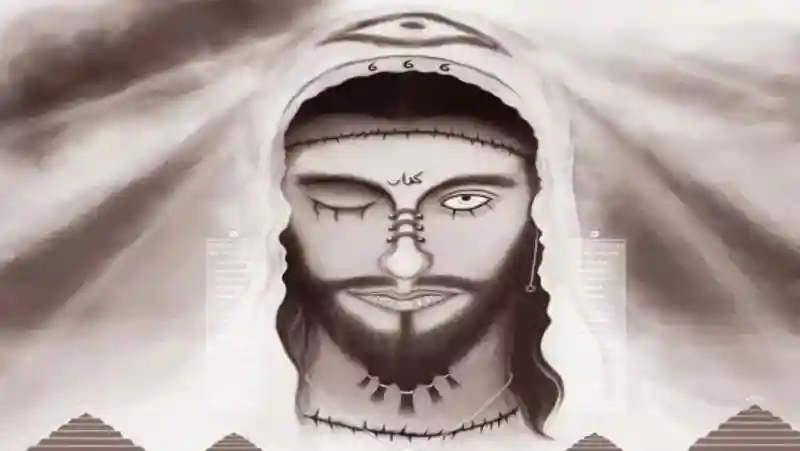
traced in Jewish sacred texts, especially the distorted Torah and the Talmud. The current Torah is full of prophecies and depictions of apocalyptic wars that place the Israelites at the center and consider other nations as enemies that must be destroyed.
The Talmud is also a book of extraordinary importance to Orthodox Jews, containing teachings that not only depict non-Jews as inferior and impure but also regard any non-Jewish savior as a major threat to the chosen people. For this reason, when the idea of Mahdism and the appearance of a global savior emerged in the Islamic world, it was natural that Jewish scholars and later Zionist political currents would view it with sensitivity and hostility, considering it a serious threat to their historical projects.
From the very early centuries of Islam, the idea of Mahdism led to many uprisings and anti-oppression movements, which always caused concern for colonial powers. In modern centuries, with the expansion of European colonialism and especially the influence of Jews in centers of power, the project of controlling the idea of Mahdism came into focus. One of their important tools was the establishment of deviant sects.
Sects such as Freemasonry, the Baha’i Faith, and Wahhabism were each designed in a way to either deny the principle of Mahdism or present a distorted and caricatured image of it.
Whose existence became intertwined with secret Jewish-Christian circles in the 18th and 19th centuries, sought through its symbols and teachings to distort the model of the savior in a secular and humanistic form, replacing the expectation of the Mahdi with the expectation of a New World Order.Freemasonry originated from the guilds of masons and stonecutters in medieval Europe. These guilds existed in the 14th and 15th centuries and were engaged in building churches and castles. At that time, the construction of large churches and cathedrals was the greatest project, so only professional masons and architects could work on these projects.
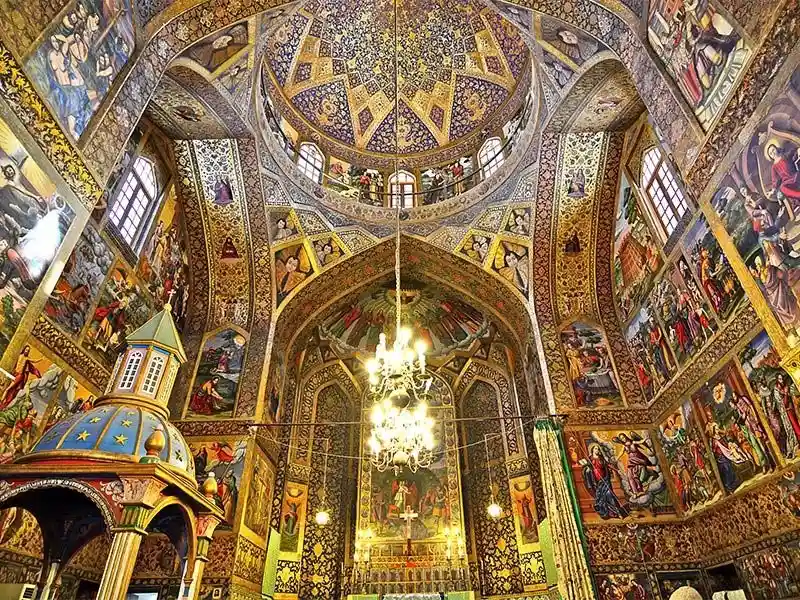
Because architectural and engineering techniques were rare and complex at that time, these masters had their own training and symbols. To prevent outsiders from misusing their knowledge, they used codes, signs, and ceremonial rituals.
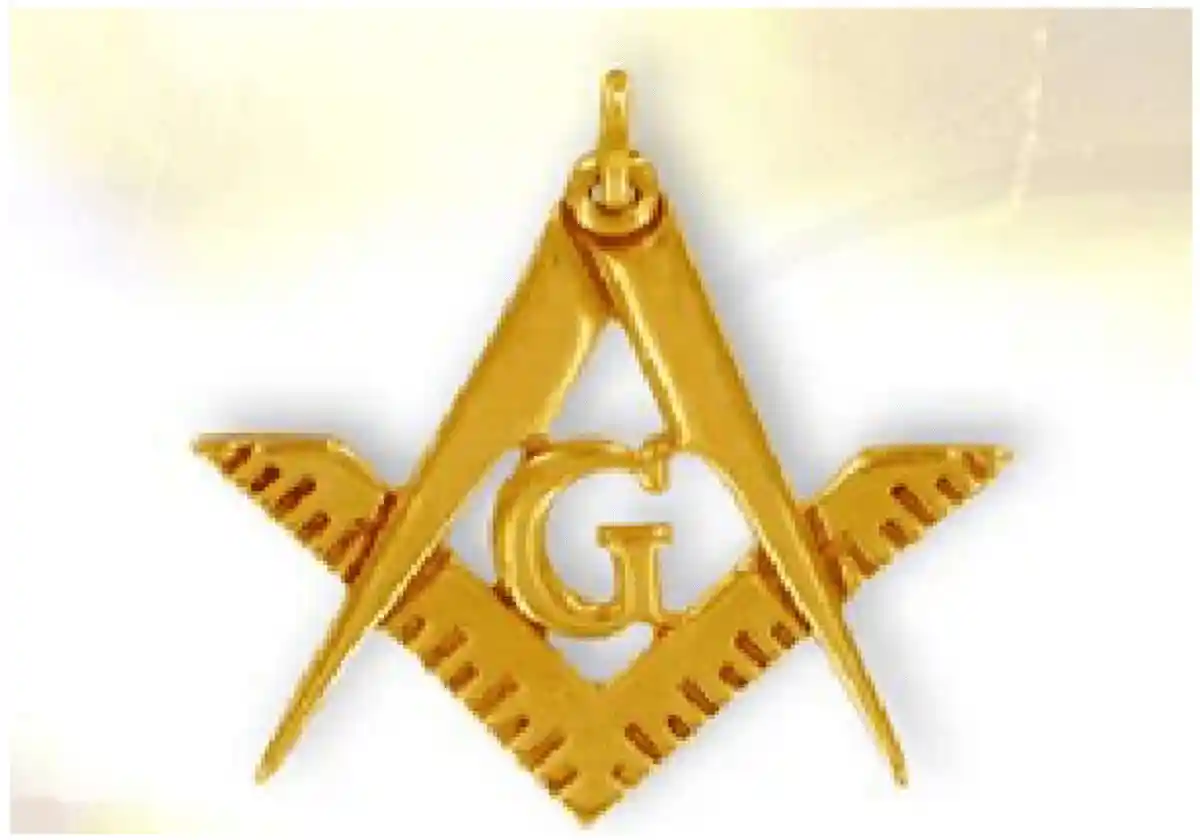
This secrecy later became the basis of Masonic symbols (such as the square and compass, the eye of providence, and others). With the end of the “church-building era,” the profession of masonry no longer held the same importance.
To prevent their decline, the lodges (assemblies) began accepting non-masons, most of whom were from the aristocracy, intellectuals, and philosophers. These individuals were more interested in philosophical, ethical, and
scientific discussions than in masonry itself. This caused the lodges to transform from a professional guild into a philosophical and intellectual society.

Four local lodges in London decided to unite and establish a central organization. This union marked the official birth of the Grand Lodge of England.
From here, Freemasonry began in its modern form: a semi-secret society with various degrees of membership, special symbols and ceremonies, focusing on concepts such as equality, freedom, brotherhood, wisdom, and religious tolerance.Why was it secretive? Because its roots were in a profession with technical secrets (masonry).
Also, the new members (aristocrats and philosophers), for political and religious reasons, had to keep their meetings private (Europe was full of religious wars). The use of symbols and rituals (such as apprentice, master, and grand master degrees) further added to its mysterious nature.
Although the initial focus of Masonic societies was on individual ethics and the “perfect human,” rather than global politics or anti-messiah agendas, as Freemasonry expanded in Europe and America, many secular intellectuals, revolutionaries, and even aristocrats joined these societies. This caused Freemasonry to become a platform for new ideas (liberalism, secularism, criticism of the church).
In the 19th century, the modern Zionist movement was formed by Theodor Herzl (1897 – Basel Zionist Congress). During the same period, some Jewish intellectuals were also members of Masonic lodges. From this point, Freemasons and their semi-secret societies became a tool for Jews to achieve their global objectives.
Some Islamic and Christian researchers believe that Freemasonry and Zionism intertwined to implement a global project aimed at preparing the appearance of a false savior (Antichrist/Dajjal).
By claiming prophethood and introducing a new religion, effectively sought to eliminate belief in the Promised Mahdi and undermine Islamic messianism.
The Baha’i Faith emerged in 19th-century Iran; it began with the Bábí movement, when Seyyed Ali Muhammad Báb (1844 CE / 1260 AH) in Shiraz claimed to be the Gate (Báb) of Imam Mahdi, and later extended his claims to prophethood.The Báb was executed in Tabriz in 1850 CE, but his followers remained. After him, Mirza Husayn Ali Nuri (Bahá’u’lláh) claimed prophethood in Baghdad in 1863 CE and founded the new religion of Baha’ism. By order of the Ottoman government, he was first exiled to Istanbul, then Edirne, and finally to Acre in Palestine, where he remained until his death in 1892 CE.After him, his son ‘Abdu’l-Bahá succeeded him and spread the Baha’i Faith in the West (he died in Haifa in 1921 CE). Then his grandson Shoghi Effendi (1921–1957) took leadership, and afterward, the institution Bahá’í World Centre (Bahá’í Administrative Center) was established in Haifa, Israel, as the global leadership center (1963 CE).

Which emerged with the encouragement and support of British colonialism, fueled intense hostility toward Shi’a and denounced belief in Mahdism, creating grounds for division and discord among Muslims.
Wahhabism was founded in the 18th century in the Arabian Peninsula by Muhammad ibn Abd al-Wahhab (1703–1792 CE / 1115–1206 AH). He was from Najd and, emphasizing a return to “pure monotheism,” declared many Muslim beliefs and practices (such as grave visitation, intercession, and seeking help from saints) as polytheism. In 1744 CE, he made a pact with Muhammad ibn Saud (ancestor of the Al Saud family) and established the alliance
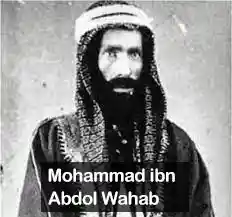
of “religious call and political power.” This union led to the creation of the first Saudi-Wahhabi state, which attacked Muslim-populated cities and was eventually suppressed by the Ottomans. After several collapses and recoveries, in the early 20th century, with direct British support, the Saudi family regained power, and in 1932 CE, the Kingdom of Saudi Arabia was officially founded. Wahhabism then became the official religion of the state and, fueled by oil wealth, spread throughout the Muslim world.
In the field of writing and literary production, Jews, Zionists, and Christians have historically attempted to portray the idea of Mahdism as a threat through books, articles, and speeches. In many works by Orientalists affiliated with Jewish-Christian centers, Shi’a Mahdism has been depicted as a cause of rebellion, revolution, and political instability, warning Western powers that this belief could pose a threat to their interests.
For example, the book End Times and the Secret of the Mahdi: Unlocking the Mystery of Revelation and the Antichrist by Michael Joseph, a Christian author, makes a comparative study between the “Mahdi” in Islam and the “Antichrist” in Christianity and presents it as part of an apocalyptic plan. His approach is mostly cautionary and from an anti-Mahdism Christian perspective.
The aim of this literature was to instill the idea that anyone who spoke of the Mahdi and anticipation was an enemy of the world order and a threat to security. This perspective later influenced Western and Israeli political discourse, and in their security reports, they repeatedly emphasized the “danger of Mahdism thought.”
Another important tool of Zionism in the project of Mahdi-Phobia has been cinema and modern media. Hollywood, as the world’s largest entertainment industry with a significant Jewish influence, has repeatedly produced films in which the apocalyptic savior or a dangerous, bloodthirsty figure is portrayed, or symbols of the Islamic savior are shown in a distorted way.
Here are just some examples of major Hollywood studios with Jewish roots:
Paramount Pictures was founded by the Hungarian Jew Adolf Zukor.
Metro-Goldwyn-Mayer (MGM) was the result of the efforts of Louis B. Mayer, Samuel Goldwyn, and Marcus Loew, all Jews.
Warner Bros was founded by four Polish-Jewish brothers: Harry, Albert, Sam, and Jack Warner.
20th Century Fox was established by William Fox (Wilhelm Fuchs), a Hungarian Jew.
Columbia Pictures was founded by the Cohen brothers, Harry and Jack Cohen, along with Joe Brandt.
In many science-fiction works produced by these studios, characters appear with traits similar to Imam Mahdi (may Allah hasten his reappearance),
Universal Pictures was initiated by Karl Laemmle, a German Jew.
but they are either depicted as Dajjal-like and frightening or as defeated and unsuccessful. Films such as The Matrix, The Lord of the Rings, and even Dune are examples that some critics have seen as containing signs of a distorted concept of the savior.
In these works, a sense of fear about the future in which the savior will appear is consistently created, and the

audience unconsciously receives the message that the savior means war, bloodshed, and destruction. These portrayals are exactly in line with the Mahdi-Phobia project, which seeks to make people averse to the very idea of the savior’s appearance.
On the other hand, in contemporary media and advertising, Zionism has constantly tried to present Islamic groups awaiting the Mahdi as the most dangerous. Wherever Shi’a and the expectation of the Mahdi are mentioned, Western and Israeli media have attempted to equate them with terrorism and violence.
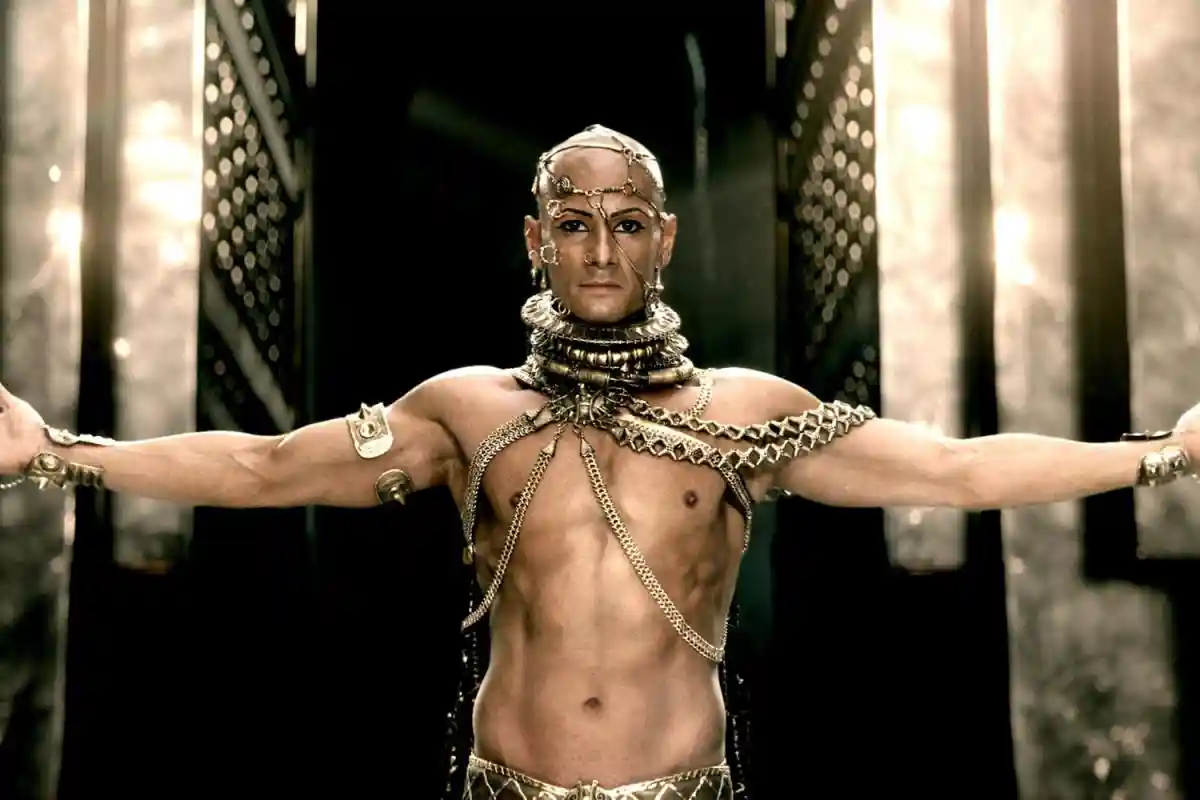
These propaganda efforts intensified especially after the Iranian Islamic Revolution, as the revolution explicitly identified itself as a continuation of the path of Mahdism and a preparatory movement for the savior’s appearance. The film 300, which depicts ancient Iranians as violent, ruthless, and full of satanic temptations, was produced in line with this policy.
Since then, many Western and Israeli think tanks have published numerous articles emphasizing the danger of
Mahdism in Iran and presenting it as a threat to Israeli and Western security. This propaganda caused the name of the Mahdi in Western public media to be associated with danger and violence, which is exactly the Mahdi-Phobia that Zionism seeks to propagate.
In the political sphere, Zionism also sought to present a terrifying image of messianism by supporting extremist and takfiri groups such as Al-Qaeda and ISIS. ISIS, by exploiting Islamic narrations about the end times, presented itself as the army of the Mahdi, but in practice committed the worst atrocities.
Behind many of these movements, hidden hands of Western and Israeli intelligence services can be seen, deliberately aiming to confuse the global perception of the concept of the Mahdi. When people around the world

witnessed the bloody scenes of ISIS and heard them claim to be the end-time army, they unconsciously equated any Islamic messianism with violence. This is precisely the Mahdi-Phobia project.
Donald Trump, in his speeches and debates, claimed that Barack Obama was the founder of ISIS and Hillary Clinton was the “co-founder,” arguing that their withdrawal of forces from Iraq created this security vacuum.(1)
In a 2009 interview, Hillary Clinton said: “In the 1980s, we supported the Mujahideen, and later they turned against us.” She even admitted in a congressional session: “We created the Taliban and the Mujahideen to fight the Soviets.”
However, Zbigniew Brzezinski, National Security Advisor under Carter, later stated in an interview: “Yes, even before the Soviet invasion, we were helping the Mujahideen to draw the Soviets into Afghanistan.”
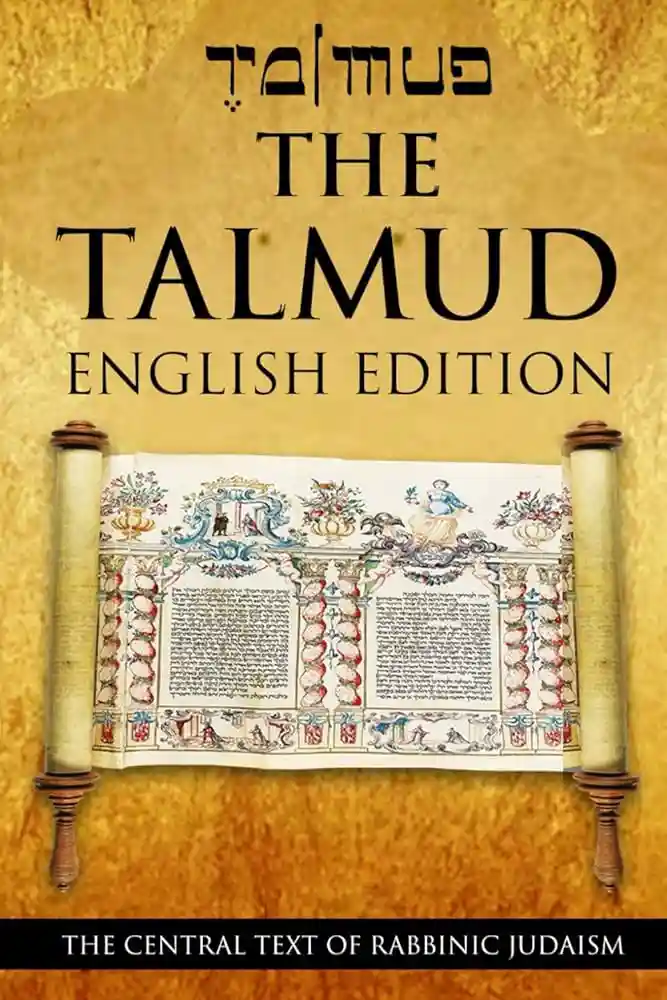
In the cultural sphere, Zionism throughout history has tried to interpret religious references in a way that portrays any non-Jewish savior as an enemy of the chosen people. In the Talmud(2) and rabbinical(3) interpretations, it is repeatedly emphasized that non-Jews must either be destroyed or enslaved in the end times.
Let us take a brief look at some teachings from the Talmud:
-Jews are the “chosen people” and God created the world for them.
-Non-Jews (referred to as “Goyim”) are inferior beings, sometimes even compared to animals.
-The life and property of non-Jews have no sanctity; if a Jew harms them, it is not considered a sin.
-Lying to a non-Jew is permissible because they are not counted as “human.”
-Some Talmudic texts claim that non-Jews are descended from animals, so their lives have no intrinsic value.
-If a Jew kills a non-Jew, no punishment is required because shedding the blood of a “Goy” is like killing an animal.
-Non-Jewish children, being Goyim, have no future, and their destruction is not considered a sin.
-Jews should not show mercy to non-Jews; even helping to give birth to a non-Jewish child is considered sinful because it continues the lineage of Israel’s enemies.
-Regarding the end times, their perspective is entirely exclusive. In Talmudic interpretations, the apocalypse is only for the victory of Israel and the destruction or enslavement of other nations.
This is why any idea of a universal savior (like Mahdism in Islam) is seen as a threat—because Islam teaches that the savior is for all humanity, not just one specific nation.
Today, Jews (especially Reform or liberal Jews) often deny these parts, claim they belong to a specific historical context, or argue they are misinterpretations. However, in the original and traditional versions of the Talmud, these statements exist and have historically inspired extremist and racist views. The tragic disaster in Gaza, from the slaughter of thousands of innocent children to siege and famine, has been influenced by these insane teachings of the Talmud. Such teachings naturally caused distorted Jewish groups to take a hostile stance

against any idea of a global savior from non-Jews. Therefore, when Islam speaks of the Mahdi, from the very beginning, it was perceived as a vital threat, and throughout history, they have sought in various ways to discredit or portray it as terrifying.
Establishment of Academic Fields:
In the modern era, Zionism has even used scientific and academic tools to present Mahdism as a security threat. In some Western universities, fields such as End Times Studies have been created, in which Shi’a Mahdism is studied as a potential danger. The purpose of these studies is to understand and counter the idea of Mahdism as a phenomenon considered threatening to the West and Israel. In other words, even in academic centers, the Mahdi-Phobia project is pursued.(4)
In summary, the Mahdi-Phobia project began with Talmudic and Torah roots, continued through the establishment of deviant sects and political movements over the centuries, was reinforced during the colonial era through Orientalist writings, intensified in the modern era with cinema and Zionist media, and today continues through academic tools and extremist groups like ISIS.
All these efforts share a common goal: to make people around the world fear the emergence of the savior and the establishment of global justice, instead of hoping for it. Yet the truth is that these efforts are ultimately doomed to fail, because human nature seeks justice and freedom, and the promise of the appearance of Imam Mahdi (may Allah hasten his reappearance) is a divine promise that will come to pass, even if all the powers of the world stand against it.
Footnotes:
1 - Trump: https://tinyurl.com/yyyatv3k
2 - The Talmud has two main parts: Mishnah (the original oral laws) and Gemara (the commentary and explanation of those laws). Rabbis wrote them over centuries. For Orthodox Jews, the Talmud is sometimes considered even more important than the Torah itself.
3 - A collection of writings and commentaries by rabbis (Jewish scholars) over history on the Torah, Talmud, and other sacred Jewish texts. These texts shaped and directed distorted Judaism, including Midrashim, Rashi’s commentary, Tosafot, Responsa, and Kabbalistic texts like the Zohar.
4 - For example, the Master of Eschatology and Doctor of Eschatology programs at the private online Wycliffe School of Theology.
